Skill Sharing: Why It Matters More Than You Think
Skill sharing is one of the most powerful ways to build community, confidence, and connection. Whether it’s happening in a classroom, a workplace, or a backyard family party, skill sharing helps people grow. And here’s the best part: all skills matter. Even the quirky ones. Even the ones you didn’t think were “skills.” When we share what we know, we help others, and ourselves, move forward.
Join us as we explore the concept of skill sharing, why it’s so impactful, and how it can happen in any environment. You’ll walk away with a fresh perspective on what counts as a skill and how you can start your own skill swap.
What Is Skill Sharing?
Skill sharing is the act of teaching or showing someone how to do something you know how to do. It’s not about being an expert, it’s about being willing. When people share what they know, they create a ripple effect. One person’s knowledge becomes another person’s breakthrough.
Skill sharing is especially powerful because it’s accessible. You don’t need a classroom or a formal workshop. You just need people who are willing to show up and share.

Where Can Skill Sharing Happen?
Let’s break the myth that learning only happens in school or at work. Skill sharing can happen in:
- A classroom
- A community center
- A virtual meetup
- A youth group
- A family gathering
- A birthday party
- A church event
- A homeschool co-op
- A neighborhood block party
Yes! even a party with family! Imagine cousins teaching each other how to play chess, grandparents showing how to make a family recipe, or siblings swapping drawing techniques. These moments are real learning. They’re just wrapped in laughter and snacks.
Skill Sharing in Different Spaces
In the Home with Family and Close Friends
Skill sharing in a home environment often unfolds organically. A parent might demonstrate how to prepare a traditional dish while a teenager explains how to use a new app. Grandparents may offer insights into practical tasks like sewing or woodworking. These exchanges happen in familiar spaces (around the dining table or in the backyard) and create opportunities for intergenerational learning. The informal setting encourages participation and fosters deeper connections through shared experiences.
- A teenager walks their grandparents through setting up a digital photo album, while a family friend demonstrates how to make a traditional dish from their cultural background.
- A parent teaches their child how to create a simple monthly budget using a spreadsheet, while a visiting aunt shares how to repot a houseplant and care for it long-term.
Among Young Professionals in Team-Building Settings
In a collaborative workspace or during a team-building event, young professionals can engage in skill sharing that enhances both personal and professional growth. One participant might lead a short session on productivity tools, while another introduces basic graphic design techniques. These interactions promote a culture of learning and innovation, allowing individuals to showcase their strengths while gaining new perspectives. The result is a more connected team with a broader skill set and renewed enthusiasm for collaboration.
- During a lunch-and-learn session, one team member leads a quick tutorial on using AI tools for productivity, while another shares a hands-on demo of basic photography techniques for social media.
- At a networking mixer, participants rotate through informal stations where they learn how to build a personal brand, practice public speaking, or create a simple cold brew coffee setup.
Inside Classrooms as a Culminating Project
In educational settings, skill sharing can serve as a powerful final project. Students prepare short presentations or interactive stations to teach their peers something they’ve mastered such as video editing, budgeting, or creative writing. Teachers and classmates rotate through each station, engaging with the content and offering feedback. This format not only reinforces the value of student-led learning but also builds confidence and communication skills in a structured, supportive environment.
- A high school student presents a step-by-step guide on how to edit videos using free software, while another teaches classmates how to write a professional email and attach a resume.
- In a middle school setting, one student leads a session on basic coding with Scratch, while another demonstrates how to create a vision board using magazine clippings and goal-setting prompts.
During Informal Gatherings with Friends
Skill sharing among friends often takes place in relaxed social settings, such as a weekend get-together or a casual dinner party. Participants might take turns demonstrating a favorite recipe, sharing a simple craft, or teaching a dance routine. These moments are low-pressure and enjoyable, yet they still provide meaningful opportunities to learn from one another. The exchange of skills becomes part of the shared experience, enriching the time spent together and sparking new interests.
- At a weekend gathering, one friend shows how to make a signature mocktail while another teaches a quick journaling technique for stress relief.
- During a small dinner party, a guest introduces a simple hand lettering technique for cards, while another shares how to use a budgeting app to track shared expenses for group trips.
A Unifying Perspective Across All Settings
Regardless of the environment, the essence of skill sharing remains consistent: people coming together to exchange knowledge in a way that builds relationships and encourages growth. Whether it’s a family afternoon, a professional mixer, a classroom showcase, or a gathering of friends, the format is flexible and inclusive. This adaptability is what makes skill sharing so impactful, it thrives wherever curiosity, creativity, and community are present.
- In a multigenerational community event, a retired engineer teaches basic woodworking while a college student shares how to build a personal website.
- At a hybrid virtual/in-person event, participants from different cities join breakout rooms to exchange skills like storytelling, digital organization, or even how to host a podcast.


All Skills Matter—Even the Odd Ones
Here’s the truth: every skill has value. Whether it’s practical, creative, or just plain fun, it can help someone grow. Sometimes the most unexpected skills spark the biggest transformations.
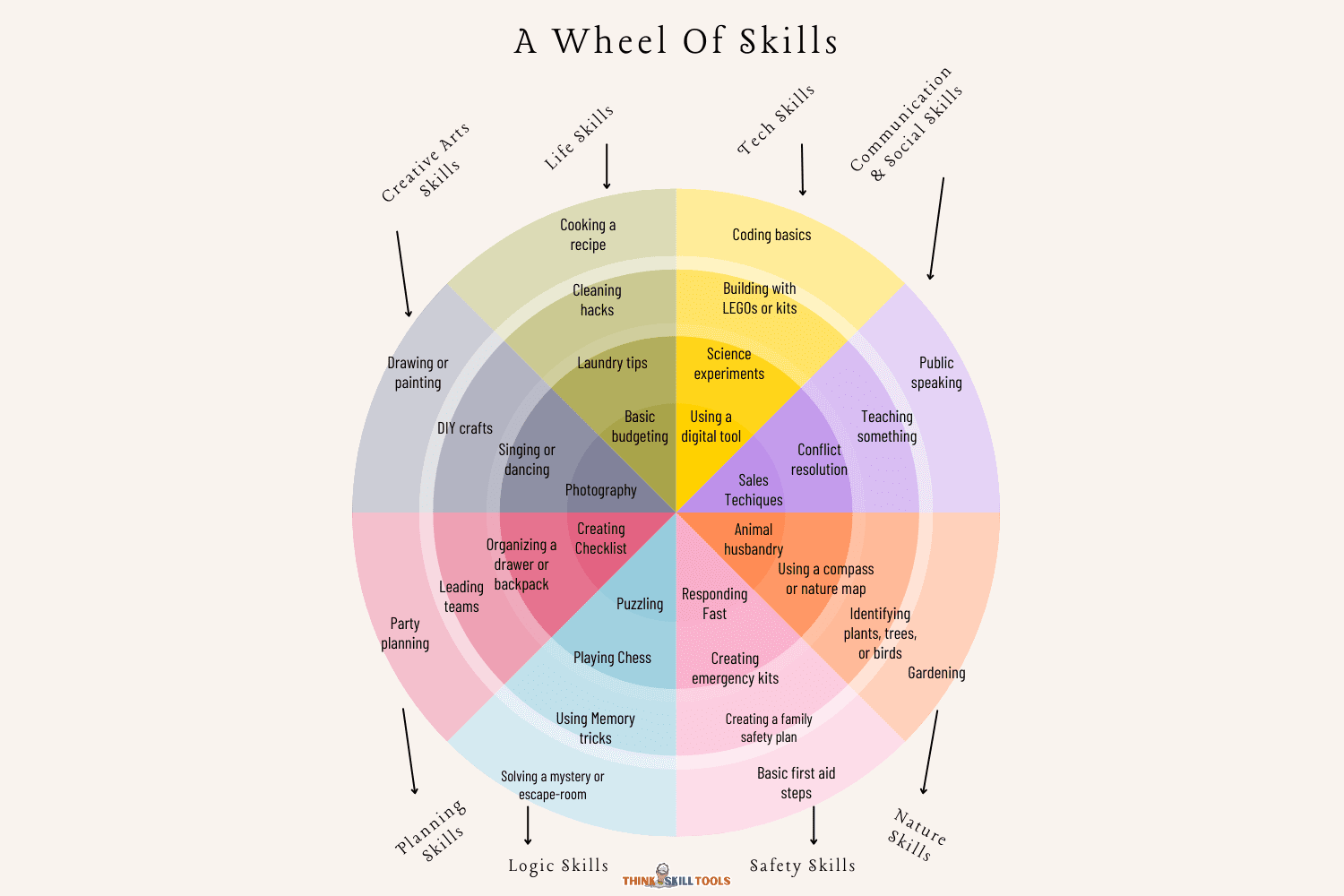
Here’s a quick list to show how wide the skill-sharing circle can be:
- How to change a tire
- How to write a poem
- How to use Canva
- How to make slime
- How to organize a closet
- How to play a ukulele
- How to start a garden
- How to fold a fitted sheet
- How to create a budget
- How to lead a prayer
- How to make a meme
- How to tell a story
- How to code a website
- How to braid hair
- How to make a friendship bracelet
If you know how to do something—even if it feels small or silly—it’s a skill worth sharing.

Skill Sharing Across Audiences
Skill swaps aren’t just for kids or adults…they’re for everyone. A 7-year-old can teach a 40-year-old how to play Roblox. A retiree can show a teen how to knit. A middle schooler can teach their younger sibling how to use Google Slides. When we open up the space for sharing, we break down age barriers and build bridges.
This kind of learning is especially powerful in mixed-age environments like homeschool groups, family reunions, or community events. Everyone brings something to the table.
Want To Throw Your Own Skill Swap Party?
We’ve got you covered. In our next blog, we’ll walk you through how to plan a skill swap event—from choosing your space to organizing your skill stations.

Hello There! Nice to meet you 🙂
I am Dr. Danielle Reid. Career education and keeping learning fun really is my jam. No I am not a formally trained career coach. I am the product of a family that did some crazy-amazing career coaching to help me reach my dreams. Nowadays I find myself doing my own career coaching for my three kids, with a lot more knowledge, tools, and resources to share.