Career Planning Examples After High School

Career planning is a vital process that helps individuals set and achieve their professional goals. It involves taking a personal inventory of your interests, skills, and values, exploring different career options, and creating a roadmap to reach your desired career. Whether you’re a high school student preparing for the future or a professional looking to advance your career, having a clear plan can make a significant difference. In this blog, we’ll explore examples of short-term and long-term career planning. Don’t worry we include a lot of details in each example to help you visualize how career planning looks (or can look) in your life.

Examples of Short-Term Career Planning
Short-term career planning focuses on goals that can be achieved within a few months ideally less than a year. These goals are often stepping stones that help you build the skills and experience needed for your long-term career aspirations. Here are some examples of short-term career planning:
- Completing a Relevant Course: Enroll in a course that enhances your skills in a specific area related to your career. For example, if you’re interested in becoming an electrician, you might take a course in electrical systems and safety.
- Gaining Work Experience: Look for internships, part-time jobs, or volunteer opportunities in your field of interest. This hands-on experience can help you build your resume and develop practical skills.
- Networking: Attend industry events, join professional organizations, and connect with professionals in your field. Building a strong network can open doors to job opportunities and provide valuable insights into your chosen career.
- Improving Soft Skills: Focus on developing essential soft skills such as communication, teamwork, and problem-solving. These skills are highly valued by employers and can enhance your overall employability.
- Setting Achievable Milestones: Already have a long term goal? Look at you already ahead of the game! Break down your long-term goals into smaller, manageable milestones. For example, if your long-term goal is to become a licensed electrician, a short-term milestone might be to complete an apprenticeship program.

Examples for Long-Term Career Planning
Long-term career planning involves setting goals that you aim to achieve over several years. These goals often require significant time, effort, and commitment. Here are some examples of long-term career planning:
- Earning a Certification: Pursue a certification in your chosen field. For example, if you aspire to become an electrician, you will need to complete an apprenticeship program and pass the necessary licensing exams.
- Advancing in Your Career: Aim for promotions or higher-level positions within your current organization or industry. This might involve gaining additional certifications, taking on leadership roles, or developing specialized expertise.
- Starting Your Own Business: If you have an entrepreneurial spirit, you might set a long-term goal to start your own electrical contracting business. This will require careful planning, market research, and the development of a solid business plan.
- Achieving Financial Stability: Set long-term financial goals such as saving for retirement, buying a home, or paying off student loans. Financial stability can provide the foundation for pursuing your career aspirations without undue stress.
- Making a Career Change: If you’re considering a significant career change, set long-term goals to acquire the necessary skills and experience in your new field. This might involve going back to school, gaining relevant work experience, or building a new professional network.
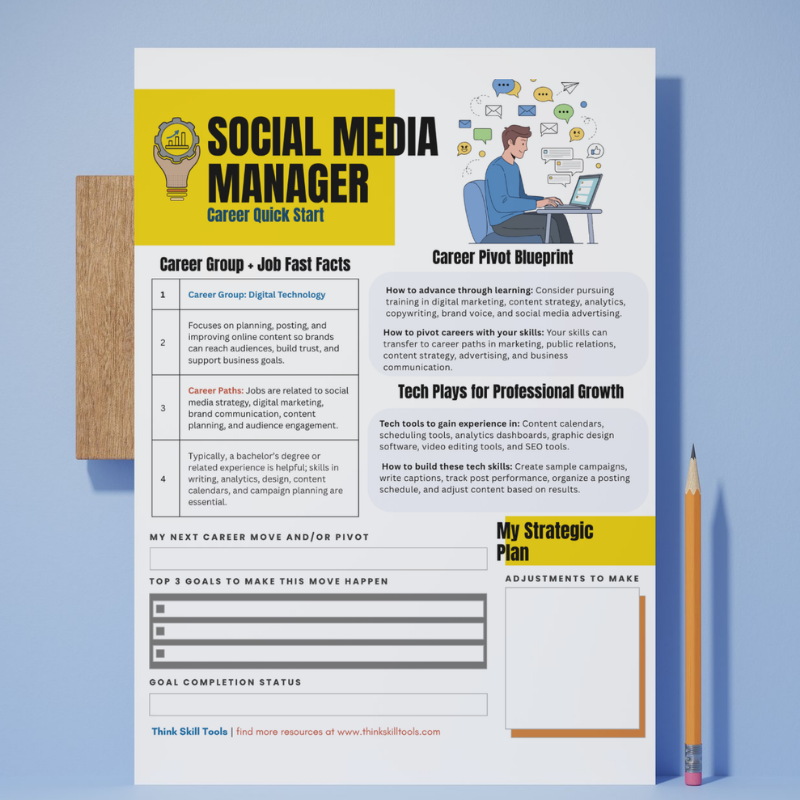
Worksheets + Templates To Support Your Career Path

We know the career path you travel is complex, complicated, and sometimes frustrating. Why not reduce some of those stressors with strategic planning and elements of fun! We provide that level of support through the variety of digital downloads we offer. All products are designed to be personalized by you.

Example In Action: Electrician
Let’s walk through a detailed example of career planning for someone that is interested in becoming an electrician. And you may be thinking – why an electrician? Well, the response to that question would be Why not?! A common path to explore after high school, especially if you are not sure if college is a viable option, includes taking on a trade job. Being an electrician is a highly in-demand trade job that can be pursued right after high school. Notice, as we walk through this example we are using the 5 steps of career planning. These 5 steps will be used throughout all detailed examples in this blog.
- Take Personal Inventory (Self-Assessment): Start by identifying your interests, skills, and values. You enjoy working with your hands, have a keen interest in electrical systems, and value job stability and growth opportunities. You also have strong problem-solving skills and good attention to detail.
- Research Career Options: Look into the role of an electrician. Research the education and certification requirements, job responsibilities, salary expectations, and future job prospects. Learn about the different settings where electricians work, such as residential, commercial, and industrial environments.
- Set Short-Term Goals:
- Complete an Apprenticeship Program: Enroll in an apprenticeship program to gain hands-on experience and learn from experienced electricians. These programs typically take four to five years to complete and include both classroom instruction and on-the-job training.
- Gain Work Experience: Look for part-time jobs or internships with local electrical contractors. This hands-on experience will help you develop practical skills and build your resume.
- Network with Professionals: Join professional organizations such as the International Brotherhood of Electrical Workers (IBEW) and attend industry events to connect with professionals in the field.
- Set Long-Term Goals:
- Pass the Licensing Exam: After completing your apprenticeship program, study for and pass the licensing exam to become a certified electrician.
- Secure a Full-Time Job: Apply for full-time positions as a licensed electrician. Use your certification, work experience, and professional network to find job opportunities.
- Advance in Your Career: Aim for promotions or specialized roles within the electrical field, such as a master electrician or electrical contractor. Consider pursuing additional certifications or continuing education to enhance your skills and knowledge.
- Create an Action Plan:
- Education and Training: Enroll in an apprenticeship program and complete the required coursework and on-the-job training.
- Gain Experience: Look for part-time jobs or internships with local electrical contractors to gain hands-on experience.
- Build Your Network: Join professional organizations, attend industry events, and connect with professionals in the field.
- Review and Adjust Your Plan: Regularly evaluate your progress and make adjustments as needed to stay on track with your goals.

Example In Action: Retail Manager
Now, let’s walk through a detailed example of career planning for a high school student interested in becoming a retail manager, a career that can be pursued right after high school and offers opportunities for growth.
- Self-Assessment: Start by identifying your interests, skills, and values. You enjoy interacting with people, have strong organizational skills, and value leadership and customer service. You also have a knack for problem-solving and managing tasks efficiently.
- Research Career Options: Look into the role of a retail manager. Research the education and experience requirements, job responsibilities, salary expectations, and future job prospects. Learn about the different settings where retail managers work, such as department stores, specialty shops, and large retail chains.
- Set Short-Term Goals:
- Gain Work Experience: Look for part-time jobs or internships in retail settings. This hands-on experience will help you develop practical skills and build your resume.
- Complete Relevant Courses: Enroll in courses related to retail management, customer service, and business operations. These courses can provide valuable knowledge and skills.
- Network with Professionals: Join professional organizations such as the National Retail Federation (NRF) and attend industry events to connect with professionals in the field.
- Set Long-Term Goals:
- Advance to a Supervisory Role: After gaining experience as a sales associate, aim for a promotion to a supervisory or assistant manager position. This will provide you with leadership experience and prepare you for a managerial role.
- Secure a Full-Time Managerial Position: Apply for full-time positions as a retail manager. Use your work experience, education, and professional network to find job opportunities.
- Continue Professional Development: Pursue additional certifications or continuing education in retail management, business administration, or related fields to enhance your skills and knowledge.
- Create an Action Plan:
- Education and Training: Enroll in relevant courses and pursue certifications in retail management and customer service.
- Gain Experience: Look for part-time jobs or internships in retail settings to gain hands-on experience.
- Build Your Network: Join professional organizations, attend industry events, and connect with professionals in the field.
- Review and Adjust Your Plan: Regularly evaluate your progress and make adjustments as needed to stay on track with your goals.

Example In Action: AI Specialist
For our last example, let’s walk through a detailed example of career planning for someone interested in becoming an AI specialist, which is a rapidly growing field with numerous opportunities.
- Self-Assessment: Start by identifying your interests, skills, and values. You enjoy working with technology, have a strong interest in artificial intelligence, and value innovation and problem-solving. You also have strong analytical skills and a passion for learning.
- Research Career Options: Look into the role of an AI specialist. Research the education and certification requirements, job responsibilities, salary expectations, and future job prospects. Learn about the different areas within AI, such as machine learning, natural language processing, and computer vision.
- Set Short-Term Goals:
- Learn Programming Languages: Start by learning programming languages commonly used in AI, such as Python, Java, and R. Online courses and tutorials can help you get started.
- Complete Relevant Courses: Enroll in courses related to AI, machine learning, and data science. Platforms like Coursera, edX, and Udemy offer a variety of online courses.
- Gain Hands-On Experience: Work on AI projects to apply your knowledge. Participate in coding competitions, hackathons, and online challenges to build your skills.
- Set Long-Term Goals:
- Pursue a Degree in AI or Related Field: Consider pursuing a bachelor’s degree in computer science, data science, or a related field with a focus on AI. Some universities now offer specialized AI programs.
- Gain Industry Experience: Look for internships or entry-level positions in tech companies that focus on AI. This hands-on experience will help you build your resume and develop practical skills.
- Advance in Your Career: Aim for higher
- Create an Action Plan:
- Education and Training: Enroll in relevant courses and pursue certifications in computer science or similar.
- Gain Experience: Keep refining your skills with machine learning! Use the tools to help you gain a greater understanding of AI tools. Attend webinars and apply what you learn to your own personal use with AI tools. Show off that application by teaching others or helping others as an AI specialist.
- Build Your Network: Join professional organizations, attend industry events, and connect with professionals in the field.
- Review and Adjust Your Plan: Regularly evaluate your progress and make adjustments as needed to stay on track with your goals.
Plan Your Future With Our Career Plans.
Keep your planning personalized…as it should be

Hello There! Nice to meet you 🙂
I am Dr. Danielle Reid. Career education and keeping learning fun really is my jam. No I am not a formally trained career coach. I am the product of a family that did some crazy-amazing career coaching to help me reach my dreams. Nowadays I find myself doing my own career coaching for my three kids, with a lot more knowledge, tools, and resources to share.