How to Write Your First Resume With No Experience
updated September 2026

Your Cliff Notes
- Writing a high school student resume starts with identifying the skills, responsibilities, projects, activities, and accomplishments you already have.
- Explore 50 Soft Skills Every Teen Should Master to recognize valuable abilities you may already use at school, at home, or in your community.
- Read 10 Adulting Soft Skills Teens Need Before Their First Job Interview to connect your resume skills to the qualities employers may want to discuss during an interview.
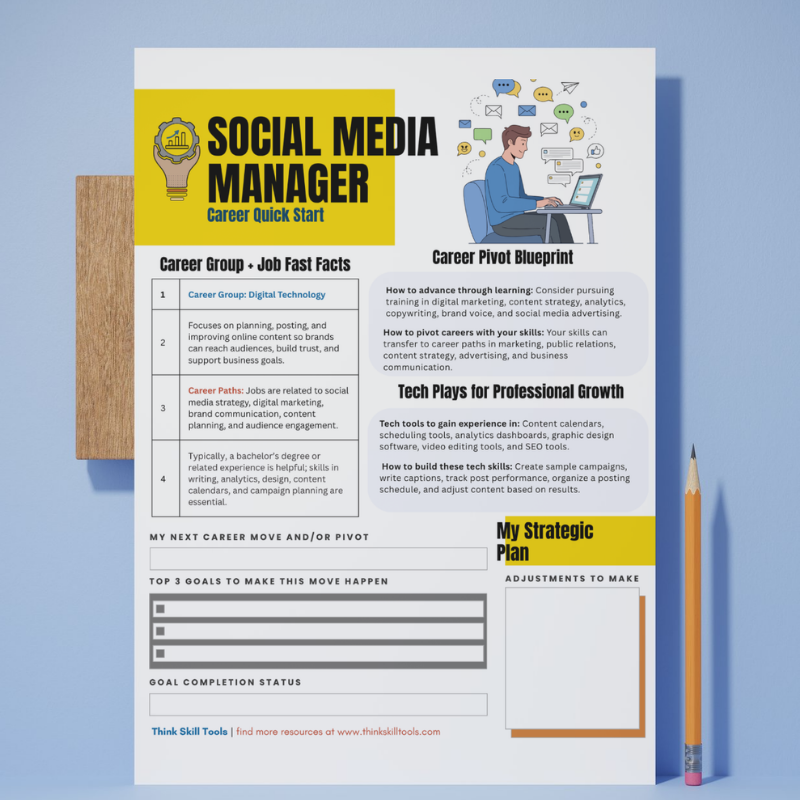
- Try a Career Quick Start Guide to organize your strengths, explore career paths, and prepare for the next step in your career journey.
Why We Build Workforce-Ready Tools
Your resume is only one part of preparing for the workforce. The skills you build, the experiences you gain, and the way you communicate your value all help you prepare for an evolving career.
Watch this video to learn why we turn complex career concepts into simple, practical, and relatable tools that help you recognize your strengths, showcase your value, and walk in your worth.
Writing your first resume can feel strange, especially when you have never had a formal job. You may look at the blank page and wonder, “What am I supposed to put here if I do not have work experience?” Well let’s keep it 100 over here….did you know you probably have more experience than you realize? Yep, you sure do!
You see, school projects, volunteer work, clubs, sports, family responsibilities, creative activities, part-time work, and community involvement can all help you build valuable career skills. Your resume gives you a place to organize those experiences and show someone else what you can do.
And no, you do not need to sound like an experienced professional. You simply need to introduce yourself clearly, highlight your most relevant strengths, and show that you are ready to learn. You can use your resume to apply for a first job, internship, volunteer role, scholarship, leadership position, or another opportunity. Let’s turn the experience you already have into a resume that represents your skills, effort, and potential.
Skip the Formatting Stress!
Don’t spend hours fighting with alignment grids on a blank screen. Grab our step-by-step Resume Bundle / Resume Activation Toolkit inside The Launchpad. Get beautifully styled, educator-approved templates built specifically for first-time job seekers.

What Should You Put on Your First Resume?
Let’s kick off with the basics. Here is what you may need to include on your resume:
- Your contact information: Add your name, phone number, professional email address, city, and state.
- A professional summary: Write two or three sentences that introduce who you are, what you can contribute, and the type of opportunity you are seeking.
- Education: Include where you go to school, your expected graduation date, and any relevant courses, certifications, honors, or academic projects.
- Work experience: Add any jobs you have held, what you did, and when you worked there.
- Other experience: Include volunteer service, internships, school projects, family responsibilities, freelance work, or informal paid work.
- Skills: List relevant things you are good at, such as computer skills, communication, teamwork, organization, or problem-solving.
- Achievements: Highlight awards, certifications, academic accomplishments, or meaningful goals you have reached.
- Personal highlights: Include relevant volunteer work, extracurricular activities, sports, clubs, or leadership roles.
Remember, experience does not have to come from a traditional job. If you have completed a group project, volunteered at an event, helped care for a family member, created graphics for a club, tutored another student, or managed a responsibility at home, you have used skills that may be valuable to an employer.
Before you continue reading, ask yourself: Do you already have a resume?
If so, open your resume file and perform a quick evaluation. Do you have the basics listed above? If not, make sure to add the sections that are relevant to you. If you are starting from scratch, try this three-step process:
- Go online and review job postings for roles that interest you.
- Review the skills and experience employers are looking for. Compare those qualifications with your own skills and highlight the ones that match. Think of it like a puzzle. You are finding the pieces that fit together.
- Gather your contact information, education, skills, activities, achievements, and experience in one document.
Once you finish this process, you should have enough information to begin building the first draft of your resume. Before you continue, take a few minutes to complete this step. From here, you will be well on your way toward creating a resume that helps an employer understand what you can contribute.
Take Your Career Preparation Further
Building a resume becomes easier when you understand your strengths, goals, accomplishments, and career options.
The Career Workforce Ready Kit includes tools for career reflection, interview preparation, goal planning, and communicating your career capabilities. It can help you create a practical plan for your future, whether you are considering college, technical training, military service, entrepreneurship, or entering the workforce.

Easy Resume Strategies
You have mastered the basics, so celebrate that win! Now, let’s talk about easy resume strategies that can make your resume stronger. Here are a few ways to improve its clarity, organization, and overall quality.
1. Find a professional template
Explore online or in apps like Word or Canva for resume designs that resonate with your vibe. And yes there is an emphasis on vibe. Choosing a template speaks to your creativity and personality. Just make sure to balance this creativity with professionalism (i.e. less doodle graphics and maybe more modern aesthetics will do the trick). Choose a simple template with:
- Clear section headings
- An easy-to-read font
- Consistent spacing
- Short bullet points
- Enough open space to prevent the page from looking crowded
Once your resume is finished, save it as a PDF unless the application requests another file type. Use a professional file name such as: FirstName-LastName-Resume.pdf
2. Keep your language clear and direct
Use words that everyone can get; leave out words that might be too fancy or confusing for people to understand. For example…
Instead of saying: “Used methods to make projects better.” You could write: Collaborated with classmates to improve a group project and complete it by the assigned deadline.
The revised statement is clearer because it explains what you did, who you worked with, and what you accomplished. Whenever possible, begin your resume bullet points with action words such as:
- Volunteered
- Assisted
- Built
- Collaborated
- Coordinated
- Created
- Designed
- Helped
- Led
- Managed
- Organized
- Prepared
- Presented
- Researched
- Supported
- Tracked
3. Focus on key achievements
Draw attention to your successes from class, work, volunteer service, and extracurricular activities. Choose accomplishments that demonstrate your abilities and dedication.
Instead of writing: “Helped with a local event.” You could write: Helped organize materials and welcome guests during a local fundraiser, using communication and teamwork to support the event.
If you have an accurate number or measurable result, you may include it. For example: “Organized and hosted a charity fundraiser that raised $400 for a local cause, demonstrating event-planning and communication skills.” Only use numbers that are accurate. Your goal is to explain your experience clearly, not make it sound bigger than it was.
4. Highlight relevant classes and projects
Have you taken a class that gave you experience related to the responsibilities an employer included in a job posting? Now is the time to highlight it. List the course or project as a heading. Underneath it, include short, bulleted statements explaining what you did, what you learned, and which tools or skills you used. For example:
Digital Media Project
- Collaborated with three classmates to plan and create a digital presentation.
- Designed graphics using Canva and organized project files in Google Drive.
- Presented the finished project to the class by the assigned deadline.
Make sure you only include information that is relevant to the opportunity and accurately represents the work you completed.
5. Turn everyday responsibilities into resume content
You do not need to have a formal job to demonstrate valuable skills. Consider whether you have:
- Helped care for children, relatives, or pets
- Completed a major school project
- Created videos, graphics, websites, crafts, or other products
- Helped organize an event
- Tutored another student
- Participated in sports, clubs, or competitions
- Sold a product or provided a service
- Volunteered in your community
- Managed a personal schedule or important deadline
Next, connect the responsibility to a skill. For example:
- Helping a younger sibling with homework can demonstrate communication and patience.
- Managing equipment for a sports team can demonstrate organization and responsibility.
- Completing a group presentation can demonstrate collaboration and public speaking.
- Selling handmade products can demonstrate creativity, customer service, and basic money management.
- Creating social media posts for a school club can demonstrate writing, design, and digital communication.
Keep in mind, the goal is not to invent or hype your experience. The goal is to recognize the value of what you have already done and explain it clearly. Let’s say it loud for the people in the back: explain your worth….clearly.
6. Keep it short and focused
Make sure your resume content is short and to the point. Do not ramble with long stories or include information that does not support your application. Stick to the details that show why you are prepared for the opportunity.
Instead of writing down everything you have ever done, focus on the experiences that are most relevant to the position. You might include internships, after-school jobs, volunteer work, school projects, or activities that demonstrate the skills the employer wants.
For many first-time job seekers, a one-page resume provides enough room to present the most relevant information. You do not need to fill every inch of the page. Your goal is to make your qualifications clear and easy to find.
Match Your Resume to the Opportunity
Avoid sending the exact same resume for every application. Before you apply, review the description for the job, internship, scholarship, volunteer role, or other opportunity. Look for repeated words that describe:
- Required skills
- Typical responsibilities
- Preferred experience
- Personal qualities
- Technology or tools
- Scheduling expectations
Next, compare the description with your own experience. If the employer mentions teamwork, identify a real example of when you worked successfully with others. If the description includes organization, show how you organized information, materials, events, schedules, or deadlines. Here is a quick process you can try:
- Highlight three important skills in the opportunity description.
- Identify one real example that demonstrates each skill.
- Add your strongest and most relevant examples to your resume.
- Remove information that does not support your application.
- Review your resume for accuracy and clarity.
You can use some of the employer’s language when it accurately describes your experience, but do not copy full sentences from the posting. Your resume should remain truthful and sound like you. Remember – we are all about team authenticity over here. The more authentic and true you are to yourself the better you stand out against the AI slop and fakeness that sometimes appears on social media.
Write Stronger Resume Bullet Points
A weak resume bullet only names a task. A stronger bullet explains what you did and provides useful context. Here’s a simple structure to try out: Action + task + skill, purpose, or result
Ok so that does look like a little bit of math is woven into that structure but don’t let those plus sign’s scare you! Check out these examples using this structure.
Instead of: Worked on group projects. Write: Collaborated with four classmates to research, create, and present a science project by the assigned deadline.
Instead of: Babysat children. Write: Supervised two children, prepared simple meals, organized activities, and followed the family’s evening routine.
Instead of: Member of the art club. Write: Created promotional graphics for art club events and collaborated with other members to prepare student displays.
You likely get the point now with all these examples. Let’s go back to what we discussed earlier. These examples do not exaggerate or hype the experience. They simply provide enough detail to help an employer understand what you did and which skills you used.

Review and Critique Process
Imagine your resume as one of the many tools in your career toolbox. Like any useful tool, your resume requires care and maintenance. Your resume should be polished and continually updated to help others understand your skills and accomplishments. Reviewing and critiquing your resume can uncover mistakes and areas for improvement. With each revision, you will be one step closer to finding new opportunities. Here are a few helpful strategies.
- Use Digital Tools Carefully: You can use spelling, grammar, or AI-assisted tools to identify possible errors and improve clarity. These tools can act like digital assistants, but they should not make every decision for you. Always read every suggestion before accepting it. Make sure the final wording is truthful, specific, and sounds natural. A digital tool does not know your experience unless you provide accurate information.
- Ask a Mentor: Talk to a teacher or someone you trust, such as a parent, counselor, career coach, or mentor. That person can offer suggestions and help you identify information that may be missing. Specific questions can lead to more useful feedback. Instead of asking, “Is my resume good?” ask specific questions:
- Is any part of my resume unclear?
- Which experience sounds the strongest?
- Is anything important missing?
- Did you notice any errors?
- Does this resume match the opportunity?
- Take a Break: Don’t forget to give yourself breaks while working on your resume. Stepping away for a bit can help you come back with fresh ideas and catch any little mistakes you might have missed.
- Complete a Final Review: Before submitting your resume, check the following:
- Is your name and contact information correct?
- Is your email address professional?
- Does your summary match the opportunity?
- Did you include relevant education and experience?
- Are your skills supported by real examples?
- Do your bullet points begin with clear action words?
- Are the dates and verb tenses consistent?
- Did you check the spelling, punctuation, and grammar?
- Is the formatting easy to read?
- Did you save the final version in the requested file format?
- Does the file have a professional name?

Continous Improvement
As you continue exploring your career path, your resume should grow with you. At first, your resume might focus on school, activities, projects, volunteering, and any internships or jobs you have completed. As you learn and gain new skills, update your resume to show what you are now capable of doing. Keep practicing your skills, do not be afraid to ask for help, and take every opportunity to learn and grow. Once you have created your first resume, give it a checkup regularly, even when you are not actively job hunting.
Consider keeping a master resume that stores all your projects, skills, activities, jobs, and accomplishments. When you find an opportunity, use your master resume to create a shorter version featuring the most relevant information. Do not wait until an application deadline to remember everything you have accomplished. Recording your progress as it happens will make future applications easier.
By keeping your resume up to date and continuing to work on yourself, you will be better prepared when a new opportunity comes your way.
Build a Resume Around a Career You Want
A resume becomes more meaningful when you understand the type of work you want to pursue. Career research can help you identify common responsibilities, important technical skills, valuable soft skills, and experiences you can begin building now.
If you are interested in a specific industry, try one of the Think Skill Tools Career Research and Resume Builders:
- Explore the Manufacturing Career Research and Resume Builder to research manufacturing roles, organize career information, and begin creating a resume tailored to your selected role.
- Explore the Education Career Research and Resume Builder to investigate education careers, research a role, and build a research-based resume.
- Explore the Art, Entertainment and Design Career Research and Resume Builder to research creative careers and connect your interests to real-world responsibilities and skills.
These tools can help you do more than fill in a blank template. They help you research a career, recognize the qualifications connected to it, and begin building a resume with purpose.
Let’s Recap
- Your first resume should clearly show what you have learned, accomplished, and contributed, even if you have never held a formal job.
- Explore 50 Soft Skills Every Teen Should Master to identify valuable strengths you can support with real examples.
- Read Identify the Risks of Poor Time Management for Students to understand how planning, deadlines, and daily habits can affect your career preparation.
- Watch the Think Skill Tools Career Center to discover more ways to build and communicate marketable skills.
- Try a Career Research and Resume Builder to connect career research with a complete, research-based resume.
- Build your complete career plan with the Career Workforce Ready Kit and prepare for interviews, goals, and future opportunities.

Hello There! Nice to meet you 🙂
I am Dr. Danielle Reid. Career education and keeping learning fun really is my jam. No, I am not a formally trained career coach. I am the product of a family that did some crazy-amazing career coaching to help me reach my dreams. Nowadays I find myself doing my own career coaching for my three kids, with a lot more knowledge, tools, and resources to share.
Additional Good Reads