Career Exploration Made Easy for Students
Updated September 2026

Your Cliff Notes
- Career exploration helps students discover different jobs while learning more about their interests, strengths, values, and developing skills.
- Conversations, community observations, digital tools, and hands-on activities can make career learning feel practical and relevant.
- Students do not need to choose one permanent career path before they begin exploring possibilities.
- Career assessments, job profiles, virtual experiences, and career research can provide useful starting points for deeper conversations.
- Skill-building helps students connect what they are learning now to the responsibilities they may encounter in the future.
- Ready-to-use career activities and curriculum can provide structure without adding hours of planning to your schedule.
As students grow older, they will probably hear grown-ups ask, “What do you want to be when you grow up?” It can be difficult for them to think about something that seems so far away, but here is the thing: It is never too early to start exploring future possibilities. Consider a favorite video game where students get to create a character. In the context of exploring careers, this is like choosing the skills and powers that character will have on an adventure. Career exploration helps students discover what they enjoy, what they are good at, and what they may want to learn next. It also opens their eyes to opportunities they may not have encountered at home or in the classroom.
When you use technology and hands-on learning to introduce careers, the possibilities become even more exciting. Students can watch videos, complete quizzes, research jobs, investigate career clusters, and learn from professionals working in different fields.
If you are still thinking, “It is too soon for them to decide,” hear us out. Career exploration is not about pressuring students to choose one permanent job. It is about giving them room to ask questions, recognize their strengths, and understand how today’s learning can connect to tomorrow’s opportunities.
If you want an organized place to begin, the Career Exploration Resources collection includes guided blogs, mini-lesson ideas, middle school worksheets, and ways to extend career conversations through active learning
Take a Look Inside the Digital Marketing Coordinator Course
Give your middle schoolers an exciting, real-world look at digital marketing without building the lessons yourself. Watch the course walkthrough to see how ready-to-use activities turn career curiosity into practical skills and meaningful learning.

How to Begin Career Exploration
The first step of career exploration is all about testing the waters and discovering different paths that catch a student’s attention. Yes, it can be that simple.
- Begin by encouraging students to talk with the people around them. Family members, parents, friends, teachers, mentors, and community members may all have career stories to share. Students may be surprised to learn about someone’s past or current career. Storytelling really is powerful. Listening to real experiences can guide where exploration should go next.
- Venture into the community. Ask students what they see that interests them. It could be something that caught their attention at a store, healthcare office, local business, museum, library, construction site, or community event.
- Next, help students think about their own interests, likes, and dislikes. Do they have hobbies that could connect to a career? Is there a particular task they enjoy? Is there a type of work they would rather avoid?
- Special note: likes and dislikes will 100% change as students get older. Make sure they revisit this list and adjust as needed. Don’t forget that if they make adjustments, they will need to factor this into their career exploration too!
- Have students take inventory of their likes and dislikes. This can help them narrow down which careers they want to investigate after reading through job responsibilities.
- Explore career websites, videos, games, and activities designed to introduce different fields.
- Take time to read about what professionals do, which skills they use, how much different jobs may pay, and what education or training may be required.
This is only a beginning list for approaching the initial stages of career exploration, which can often feel like the most confusing part of the process. Do not be afraid to introduce jobs students have never heard of before. Those discoveries may come from interactions with family members, community professionals, books, videos, or everyday observations.
The important thing right now is to help students gather clues, ignite their imaginations, and start thinking about the many things they could do one day.
Make that First Activity Simple
You do not need to begin with a major unit. A short, focused activity can help students become comfortable talking about careers.
The Career Activity Sheets collection includes printable discovery tools organized for ages eight and under, middle school, and high school. Available resources cover topics such as career discovery, health careers, planning, interview preparation, time management, and career reflection. These tools can work as:
- Morning activities
- Early-finisher work
- Homeschool electives
- Career-center activities
- Advisory lessons
- Small-group discussions
- Independent assignments
- Career-day preparation
- Conversation starters at home
For younger learners, you can also use a playful activity such as the Career Quest Maze Activity Pack. The activity introduces careers through mazes and short career facts and can be used in classrooms, homeschool settings, or digitally.
Use Digital Tools to Support Career Exploration
Career exploration should not be a complicated thing to do. We often make it that way when we have the tools right at our finger tips to help us. One of those tools includes career counseling support. On your device, you have a personal career counselor right in your pocket, ready to guide you through the maze of career options. Such sites are designed to make discovering your passions and talents not only easy but also incredibly informative. So, what can you expect from these career exploration apps and sites? Here are some of our top recommendations on how to use these online options:
- Career assessments: Interactive quizzes and assessments can help students reflect on their interests, strengths, and values. Treat the results as conversation starters, not final answers.
- Industry Insights: Students may be curious about what it takes to succeed in different industries. Career websites can help them investigate job responsibilities, work environments, required skills, education, training, and possible career pathways.
- Do not stop after students locate the information. Ask them to compare two or three roles and explain which one interests them most.
- Virtual Job Exploration: Students often wonder what it is like to work as a scientist, nurse, designer, engineer, technician, teacher, chef, or entrepreneur. Videos, interviews, workplace stories, and virtual job-shadowing experiences can help them observe parts of a professional’s day.
- Virtual Simulation: Job simulations can allow older students to practice career-related tasks and gain a clearer sense of how work may be completed in a particular field.
- With these digital options, the possibilities are broad. Remember, however, that technology is one part of the learning process. Students still need opportunities to discuss, apply, compare, and reflect on what they discover.
- There is no one-size-fits-all approach to career exploration.

Defining Your Unique Career Path
Once students have dipped their toes into the world of careers and explored different options, it is time to take the next step: helping them define a unique career direction. This means guiding them to think more deeply about what excites them, what they do well, and which values matter to them. The likes-and-dislikes list they created earlier will be useful for this part of career exploration.
Let’s say a student loves animals and spending time outdoors. That student might investigate careers such as veterinarian, marine biologist, or wildlife biologist. If another student enjoys solving puzzles and helping others, a career in engineering, technology, or healthcare might catch their attention.
The goal is not to declare that one interest automatically equals one career. Instead, use interests as clues that can lead students toward wider career clusters and additional questions. But how do you help students reach this point of clarity? Let’s break it down.
- Exploring What Makes Them Tick: Start by asking students to think about the things that bring them joy. What games do they love to play? Which stories capture their imaginations? What types of projects keep their attention? These can become clues pointing toward future career possibilities.
- Whether a student enjoys building with LEGO bricks, conducting experiments, creating digital art, caring for animals, organizing group activities, or crafting stories with friends, those activities may provide hints about careers worth exploring.
- Identify Their Developing Strengths: Help students consider the things they do well. Are they a fast learner, creative thinker, careful observer, supportive teammate, strong communicator, or persistent problem-solver? These strengths can guide further exploration.
- The 50 Soft Skills Every Teen Should Master article can help students name abilities they may already use without realizing those skills have workplace value.
- Discover What Matters to Them: Encourage students to reflect on what matters most to them. Do they dream of protecting the environment, helping animals, supporting people, creating art, building new technology, organizing events, or solving community problems?
- Their values can act as guiding stars, leading them toward work that feels meaningful. Whether they imagine exploring the ocean or inventing a useful solution, their values can point them toward careers that deserve a closer look.
Turn Curiosity Into a Guided Career Plan
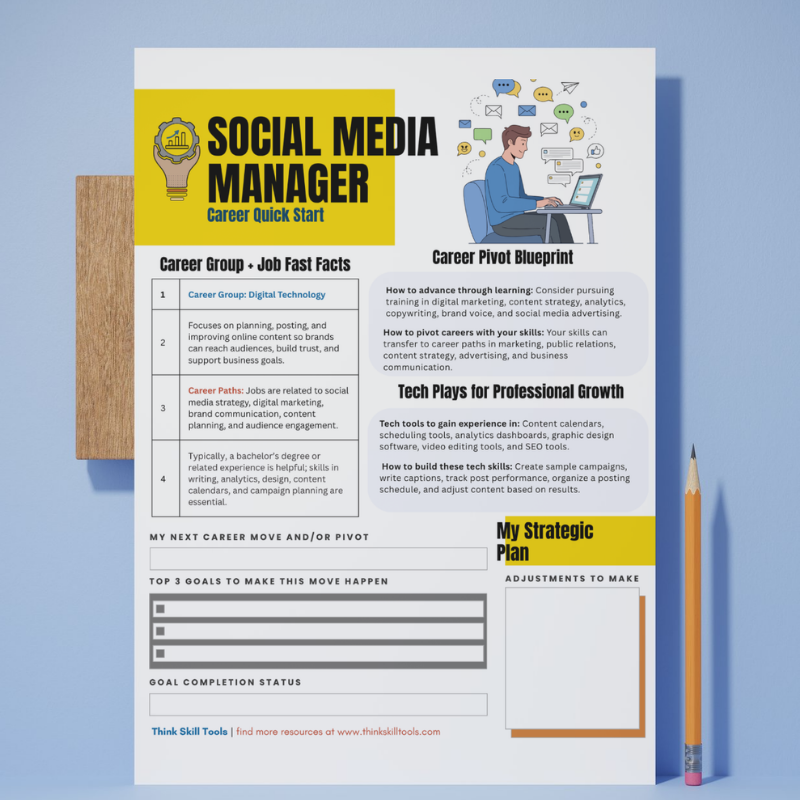
Some students need more than a list of jobs. They need a simple framework that helps them organize what they discover and decide what to investigate next. The Career Quick Start Guides give parents, teachers, and career coaches another way to guide career learning without building the process from scratch.

Unlock Potential Through Skill-Building
Students have started figuring out where their exploration should begin. Check! They have gone deeper by taking inventory of what they like and dislike about different careers. Check!
Now they are ready to read through job responsibilities and requirements.
“So many details to digest” is a valid reaction at this stage. Students might be looking at different jobs and wondering, “How would I even get there?” Let us repeat: Career exploration is not meant to be complicated. Let’s simplify the next step by starting with a useful life tool we call skill-building.
Skill-building is about helping students identify the skills they already use and determine what they may need to develop over time for a future opportunity. Keep the following points in mind:
- Skill-building is not only about having fun, though it can be enjoyable. It is also about preparing for the future.
- It is an important step toward becoming career-ready.
- Employers are not only looking for technical abilities. Communication, problem-solving, collaboration, adaptability, creative thinking, and leadership also influence how someone completes work.
- Connecting skills to careers helps students understand how their present learning may have future value.
- Students can begin strengthening these abilities now, regardless of whether they have formal work experience.
The chart in the original article offers useful starting connections:
- Creativity: Graphic designer, animator, or museum curator
- Problem-solving: Software developer or engineer
- Critical thinking: Data analyst or researcher
- Communication: Journalist or public-relations professional
- Collaboration: Project manager or team leader
- Coding: Computer programmer or game developer
- Artistic expression: Illustrator or art director
- Leadership: Entrepreneur or organizational leader
- Adaptability: UX designer or product manager
- Scientific inquiry: Biologist or environmental scientist
Treat these as examples, not restrictions. Most careers require several interconnected skills, and transferable skills can be used across industries.
To extend the discussion, What NASA’s Artemis Program Teaches Us About Teamwork in Careers can help students examine how collaboration supports a complex shared goal.
Choose the Right Level of Support
You do not have to use the same type of resource for every learner or every lesson.
- Choose an activity sheet when you need: A quick introduction, one focused skill, a short conversation starter, an early-finisher task or an affordable printable activity. Browse Career Activity Sheets
- Choose a Career Quick Start Guide when you need: A clear starting point, organized career research, a way to narrow a broad interest, and support moving from curiosity to action. Browse Career Quick Start Guides.
- Choose a Career Kit when you need: Independent work for ages 12 and older, a deeper look at one job, real-world job stories, life-skill connections, and an open-and-go printable experience. Browse Independent Career Kits.
- Choose a full course when you need: Educator-led instruction, detailed teaching support, a complete career unit, interactive learner materials, workplace simulations, a structured group experience. Browse the Curriculum Collection
You Do Not Have to Plan Career Learning Alone
Career exploration can become difficult when you are trying to find reliable information, create activities, differentiate the work, and maintain student interest at the same time.
Think Skill Tools provides ready-to-use curriculum, lesson plans, activities, independent Career Kits, and career-learning tools designed to make the process simpler for parents, educators, and career coaches.
You can begin with one activity, build a short career unit, or use a complete curriculum. The goal is not to add another complicated subject to your schedule. The goal is to give students meaningful opportunities to connect their interests, skills, and learning to the world around them.
Let’s Recap
- Career exploration becomes more meaningful when students can connect their interests, values, strengths, and developing skills to real-world possibilities.
- Explore the Career Exploration Resources to turn guided blogs and active-learning ideas into career mini-lessons.
- Try the Career Activity Sheets when you need a short, engaging activity for a classroom, homeschool day, career station, or coaching session.
- Choose a Career Quick Start Guide to give students an organized starting point for exploring a field that interests them.
- Use an independent Career Kit when students ages 12 and older are ready to investigate a job through stories, career facts, and life-skill activities.
- Teach with the Curriculum Collection when you need a deeper educator-led course with structured materials and workplace applications.
- Support your planning with Teacher Resources created to make career instruction easier to deliver.
- Read Why Using Career Cluster Days Matter to learn how themed career exploration can help students investigate related occupations.
- Plan your own experience with Career Cluster Days: How to Plan Your Own when you are ready to turn career research into an organized learning event.

Hello There! Nice to meet you 🙂
I am Dr. Danielle Reid. Career education and keeping learning fun really is my jam. No, I am not a formally trained career coach. I am the product of a family that did some crazy-amazing career coaching to help me reach my dreams. Nowadays I find myself doing my own career coaching for my three kids, with a lot more knowledge, tools, and resources to share.
Additional Good Reads