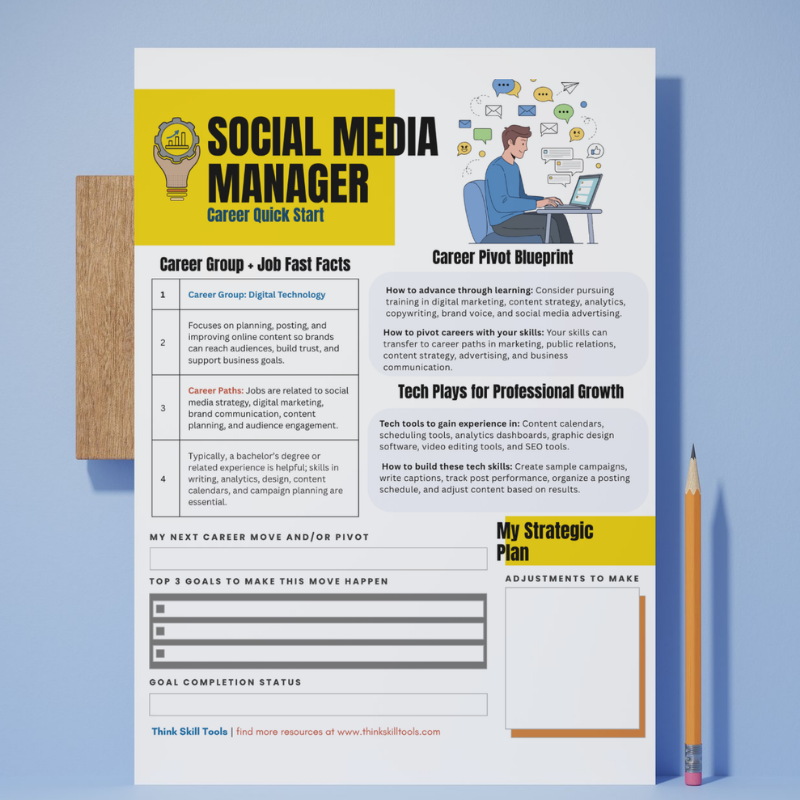
Why Using Career Cluster Day’s Matter

Your Cliff Notes
- Career Cluster Days matter because they are a fresh take on career exploration that all learners can experience. They help students build meaningful career awareness through short, structured, hands-on stations. on stations.
- Exposure to this transformative way of career exploring builds life skills, soft skills, and technical skills, as well as shows students how different types of work connect to real life.
- Students develop confidence by trying simple tasks, hearing workplace vocabulary, and interacting with trusted adults from different fields.
- These opportunities strengthen communication, organization, teamwork, and problem-solving skills that transfer across every career path.
- Whether at home, in a classroom, or in virtual spaces, Career Cluster Days create memorable learning moments that shape long-term readiness.
Career Cluster Days are more than fun rotations. They are a powerful gateway into career learning that feels accessible to every learner. When students move through hands-on, project-based stations, they begin to see how everyday skills, school knowledge, and real careers fit together in meaningful ways.
The stations also give you valuable clues about where to take the learning next. A learner who keeps returning to healthcare tasks may be ready to explore one occupation in greater depth, while another learner may want to follow a growing interest in technology, communication, or problem-solving. When that curiosity appears, the Curriculum Collection gives you several ways to continue, from individual career courses to a complete pathway bundle or independent Career Kit. You can choose the amount of structure that fits your learners and the time available in your schedule.
Such career exploratory experiences help learners build confidence, expand vocabulary, and understand how people contribute to their communities through different roles. Instead of imagining careers as distant or abstract, students get to see them up close, try a task, and talk to someone who actually does the work. Our fresh take on what a Career Cluster Day really represents is a transformative yet essential tool for building curiosity, readiness, and long-term skill development.

Turning the Event Into Learning
Before you continue reading, make sure to review this blog, which walks through how to build your own Career Cluster Day in any learning space. Once you have your day designed, something to keep in mind is the power of reflection. Including this step transforms a Career Cluster Day from a fun, hands-on activity into meaningful, long-term learning.
It gives students a chance to process what they experienced, connect new vocabulary to real-world tasks, and recognize skills they used across stations. Reflection can also help you (the educator) choose the right next step after the event. If several learners mention the same tools, responsibilities, or workplace problems, use that feedback to select a related career lesson. An individual course gives you a structured way to continue the discussion without designing the entire lesson yourself. For example, the IT Technician Career Exploration Course guides learners through technology troubleshooting, critical thinking, observation, documentation, and problem-solving. It can be taught as a stand-alone career experience or incorporated into a larger STEM, digital literacy, CTE, or career-readiness program.
No matter where learning happens (at home, in a classroom, or online), intentional reflection helps students deepen understanding and build confidence in their ability to navigate different career clusters. When the environment shifts, the reflection method simply shifts with it, allowing every learner to pause, think, and capture their growth in a way that fits their setting. Let’s dissect this a bit more for each of our three learning spaces. We tend to talk a LOT about over here at Think Skill Tools:
Homeschooling Learning Space
Reflection naturally becomes a relational moment because the learning pace is more flexible and individualized. Parents can guide students through longer conversations about what stood out, what felt challenging, and what sparked curiosity, allowing reflection to unfold organically rather than on a strict schedule. Students can keep a simple learning journal where they record new vocabulary, draw tools they used, or describe a hands-on task in their own words.
Because homeschool spaces are often quieter and more personalized, younger learners may process reflection best through storytelling, letting them retell what happened at each station in a narrative format. Older students might create a short paragraph or audio recording summarizing the skills they used across clusters, which also becomes helpful documentation for portfolios or annual evaluations. Reflection can also expand into family conversations at mealtime or during a nature walk, reinforcing the idea that learning is part of everyday life.
When you revisit these reflections over time, you may begin noticing patterns. Your learner might consistently gravitate toward certain career clusters, show confidence with particular skills, or ask to investigate an occupation more deeply. In this setting, reflection becomes more than a closing step. It helps you decide what the next learning experience should be.
For example, an interest in health science, careful observation, and experiments could grow into the Laboratory Technician Career Exploration Course. Instead of creating a new lesson from scratch, you can use the course to guide the next stage of exploration and give your learner an opportunity to experience the thinking, tasks, and skills connected to laboratory work.
Classroom Learning Space
Reflection needs structure because multiple students are capturing their thoughts at the same time. Teachers can dedicate a few minutes after rotations for students to write a brief narrative, describe a station that stands out, or explain a tool or task in complete sentences. To support students with different writing abilities, teachers can model a reflective paragraph on the board, demonstrating how to connect a skill to a career cluster using full, descriptive language. Classroom reflections can be collected in folders, digital portfolios, or learning journals, helping students see their growth over time.
Because the classroom really can be thought of as a social learning space, small-group discussions (e.g. Think-Pair-Share activities) can deepen reflection as students compare experiences, vocabulary, and observations from each station. Teachers can extend reflection by connecting it to future lessons, such as a writing assignment, a science connection, or a career-awareness discussion during morning meeting.
Virtual Learning Space
Reflection must feel personal and intentionally guided to make up for the physical distance between learners and materials. For example, students can record short videos or provide audio reflections to describe what they learned. This helps capture tone, emotion, and insight more naturally than text alone. Digital tools such as online journals, shared slides, or simple reflection forms are another great way to allow students to write about the skills they practiced or describe the purpose of a tool they observed during the activity. As another example, Teachers or parents can also host a brief live discussion where students share their experiences in small breakout groups, giving them space to verbalize their thinking.
Because virtual learning can sometimes feel passive, reflection should intentionally include active processing, such as drawing a picture of a tool, uploading a photo of a journal entry, or typing a short explanation of what they noticed during a demonstration. For younger learners, caregivers can help facilitate by asking open-ended questions and encouraging children to express their thoughts using complete sentences.
Over time, digital reflections can become a record of developing career awareness, workplace vocabulary, and growing skills. They also give you insight into what learners notice, what they may not yet understand, and which career clusters they want to explore further.
You may not always have room in the schedule to lead another complete lesson. In that case, learners ages 12 and older can continue with an independent Career Kit Workbook. This gives them a structured way to read about a profession, think through workplace responsibilities, complete career-connected activities, and reflect on their skills without requiring you to teach a full-length course.
No matter the type of learning space you are cultivating, always remember that this additional step of adding a reflection period ensures your Career Cluster Day leaves a lasting imprint. It helps learners recognize what they gained, name the skills they practiced, and understand how different career clusters shape the world around them. When adapted thoughtfully, reflection remains accessible, meaningful, and developmentally appropriate in homeschool, classroom, and virtual spaces alike. Most importantly, it teaches students that learning is not just about doing the task; it’s about understanding the impact of that task and carrying those insights into future experiences.


Bridging Life Skills and Technical Skills for Career Learning
Career Cluster Days support career exploration by explicitly connecting everyday life skills to the technical processes students observe and try. These skills do not operate separately in a real workplace. Communication, organization, adaptability, and attention to detail often determine how successfully someone completes a technical task.
A broad event can help students notice these connections across several clusters. Once a specific pathway captures their attention, a curriculum bundle can help you turn that initial exposure into a more connected sequence of learning. For instance, the Health Sciences and Care Pathways Volume 1 bundle brings multiple healthcare occupations together so learners can compare roles, responsibilities, workplace environments, and transferable skills across one larger field. The bundle is available through the Curriculum Collection.
Various Benefits Of Hosting Your Career Cluster Day
- When learners greet a presenter, follow directions, and take turns, they are practicing communication, self-control, and collaboration in the same moments they handle tools or materials. Those social and organizational behaviors make technical work smoother, showing that professionalism begins with habits, not just equipment.
- As students notice how a safety step or a quality check depends on patience and attention to detail, they begin to see character skills as part of technical excellence. This integrated experience helps them understand that careers require both people skills and tool skills working together.
- Because each station uses a simple routine, learners experience how planning and sequencing reduce stress and improve results across different kinds of work. They also build persistence by troubleshooting small mistakes and trying again, which mirrors the real workflow in many careers. Over time, these repeated connections between life skills and technical steps create a strong foundation for responsible, confident career exploration.
- The format also strengthens executive functioning by linking time, materials, and task management directly to visible outcomes. Students prepare a space, gather the right tools, and complete a short sequence, learning that organization saves time and prevents errors. When a timer signals a transition, they practice estimating effort and prioritizing what matters most inside a limited window. These micro decisions mirror adult workplace demands, where people plan, adjust, and finish within constraints.
- At the same time, technical vocabulary becomes meaningful because it is attached to actions, such as measuring, aligning, or sanitizing. Learners begin to use precise words to describe what they did and why it mattered, which builds language for future interviews, reports, or presentations.
- Even reflective conversations about what worked, what needed revision, and what skill was used more than once teach learners to evaluate process, not just product. All of this turns the event into a practical bridge between classroom habits and real-world career tasks.
- Because stations span clusters from health to trades to technology, students discover how the same life skills transfer across very different technical contexts. A learner might collaborate while measuring at a STEM table, then carry that same teamwork to laying a straight line at the construction station. This cross-cluster transfer builds adaptability, a core career readiness trait that helps people learn new tools quickly.
When students recognize the power of a growth mindset, clear communication, and that organized steps make every technical task easier, they are more willing to attempt unfamiliar challenges. Presenters reinforce this message by naming both the life skill and the technical step, helping learners map connections in real time. Families and teachers can then reference these experiences later (during chores, group projects, or digital assignments) to keep the bridge active.
In each of these examples provided, Career Cluster Days becomes a living framework that links everyday behavior to technical competence and long-term career confidence.
Let’s Recap
- Career Cluster Days matter because they build practical, relevant connections between student learning and real-world careers.
- They empower kids to see themselves as capable learners who can apply life skills and technical skills in meaningful ways.
- These experiences help learners grow in independence, confidence, and awareness, no matter their learning environment.
- With simple tools and thoughtful structure, we are transforming an old (and likely outdated) activity into an effective strategy that strengthens both academic development and long-term career readiness.

Hello There! Nice to meet you 🙂
I am Dr. Danielle Reid. Career education and keeping learning fun really is my jam. No, I am not a formally trained career coach. I am the product of a family that did some crazy-amazing career counseling to help me reach my dreams. Nowadays I find myself doing my own career counseling for my three kids, with a lot more knowledge, tools, and resources to share.