How to Turn a Liberal Arts Degree Into Career-Ready Skills
Updated September 2026

Your Cliff Notes
- A liberal arts degree can support several career paths by developing transferable abilities such as communication, research, critical thinking, collaboration, and adaptability.
- Coursework, presentations, internships, leadership roles, volunteer work, and major projects can provide evidence of your career-ready skills.
- Your degree title alone will not communicate your complete value, so you must connect your experiences to the qualifications an employer needs.
- Tailoring your resume allows you to emphasize different parts of your broad education for different roles and industries.
- Career research, resume preparation, interview practice, and an organized job search can help you turn a broad education into a focused professional strategy.
The days of locking down a single, predictable profession for life are officially over. Modern data reveals that the average individual will now navigate at least 12 different jobs throughout their career journey, turning what used to be called ‘job hopping’ into a mandatory survival strategy. If you are guiding a student who doesn’t want to be trapped by a narrow, hyper-specialized major, a broad liberal arts education is their greatest asset. Here is exactly how a versatile, interdisciplinary skill set prepares learners to stay agile, beat automated resume filters, and thrive across multiple industries.

Why Transferable Skills Matter in a Changing Career
A career does not always follow one predictable path. You may change employers, move into a different industry, pursue contract work, or combine several professional roles as your goals and circumstances evolve. A liberal arts education can support these transitions by helping you develop broad, transferable abilities such as communication, research, critical thinking, collaboration, and adaptability.
The examples below show why learning how to recognize, strengthen, and communicate these skills has become an important part of long-term career preparation.
- Skills That Travel With You: Your job title may change, but many of the abilities you develop through research, writing, presentations, group projects, internships, and community involvement can remain useful across industries. The key is learning how to recognize those abilities and explain how they created value. Help your learner identify broad career-ready skills with the Think Skill Tools Career Activity Sheets.
- The Millennial Job Shift: Moving to a new employer or industry may require you to present the same core abilities in a different way. Learning how to tailor your resume for a new field can remain useful throughout your career. Use the Launchpad Resume Bundle to organize your experience and communicate transferable skills across different professional paths.
- The Stability-Stacking Approach: Some professionals combine employment, contract projects, freelance work, clients, or additional income streams as part of their career strategy. This approach makes it important to recognize how communication, planning, project management, adaptability, and other abilities transfer across different forms of work. Learners still exploring their options can investigate specific occupations through Think Skill Tools Independent Career Workbooks.
These career patterns highlight why a broad skill set can remain valuable as your professional path changes. But simply having transferable skills is not enough. You must understand how your education helped you develop those abilities and learn how to communicate them to employers. Next, let’s look at the specific ways a liberal arts education can build career-ready skills you can carry across roles and industries.

How a Liberal Arts Education Builds Transferable Workforce Skills
A liberal arts education is characterized by its breadth, giving students opportunities to study diverse subjects rather than focusing exclusively on one specialized field. This approach often emphasizes critical thinking, communication, problem-solving, research, and creativity, which can transfer across different professions.
By encouraging intellectual curiosity and interdisciplinary thinking, a liberal arts program can help you make connections among subjects, examine challenges from different perspectives, and adapt your knowledge to changing responsibilities. These abilities become especially valuable when you can connect them to specific projects, accomplishments, and professional goals.
- Interdisciplinary Curriculum: Exposure to the humanities, social sciences, natural sciences, mathematics, and the arts can help you understand how different fields influence one another. This broad perspective may also help you recognize career pathways that you would not discover by examining only one subject.
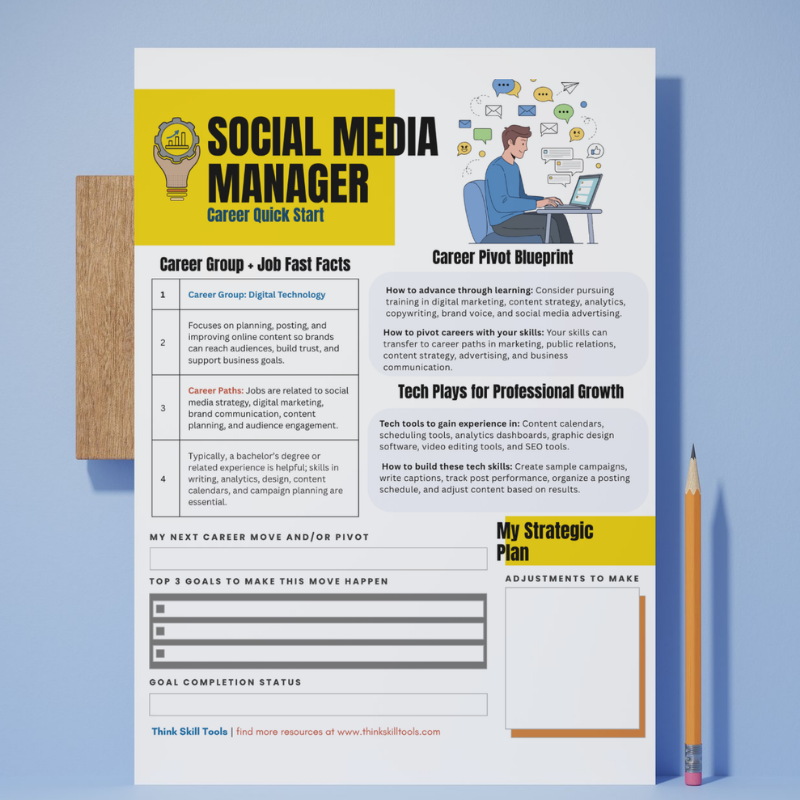
- If you are still deciding where your interests and abilities fit, use the Career Quick Start Guides to investigate different occupations and identify skills you may want to strengthen.
- Core Curriculum: A core curriculum commonly includes foundational study in writing, mathematics, science, history, literature, and the arts. These courses can help you strengthen the communication, reasoning, research, and quantitative abilities used across many workplaces.
- Your resume does not need to list every core course. Focus on classes, projects, and academic experiences that provide relevant evidence for the opportunity you want.
- Discussion- Based Learning: Small-group discussions and classroom debates can strengthen active listening, verbal communication, collaboration, and the ability to support an idea with evidence.
- These experiences can also prepare you to participate in meetings, explain recommendations, respond to questions, and communicate with people who hold different perspectives.
- Experiential Learning Opportunities: Internships, research projects, community initiatives, study programs, and other practical experiences give you opportunities to apply classroom knowledge in real situations.
- Writing and Communication Emphasis: Writing-intensive courses, presentations, and research assignments can help you communicate ideas clearly and persuasively. These experiences may also prepare you to write reports, present findings, explain recommendations, and adapt a message for different audiences.
- Continue developing these abilities with 10 Adulting Soft Skills Teens Need Before Their First Job Interview, which connects workplace communication with interview preparation.
- Intellectual Exploration Encouragement: Studying topics outside one narrow concentration can help you approach unfamiliar questions with curiosity and flexibility. It may also help you discover interests, industries, and professional possibilities you had not previously considered.
- The goal is not to present broad knowledge as expertise in every area. It is to show that you can learn, make connections, and apply ideas across different situations.
- Critical Thinking Integration: Evaluating sources, comparing perspectives, interpreting evidence, and developing reasoned conclusions can prepare you to handle ambiguity in the workplace.
- These abilities become more convincing to employers when you support them with evidence. Instead of simply listing critical thinking on your resume, describe a project, decision, or challenge that required you to analyze information and recommend a course of action.
- Use the Job Position Map to evaluate where your strongest abilities align with market needs and identify the skills you may need to develop for your next opportunity.
A liberal arts education can give you a broad foundation, but the degree title cannot communicate your complete value on its own. Your resume must translate courses, research, presentations, internships, campus involvement, and other experiences into evidence that matches the opportunity you want.

Make the Case for Your Liberal Arts Degree
A liberal arts degree can prepare you to think across disciplines, communicate ideas, evaluate information, and approach unfamiliar problems from different perspectives. However, employers will not automatically understand how your education connects to the opportunity they need to fill. The key takeaway: you must make that connection clear.
Start by identifying the experiences that best demonstrate your career-ready skills. Look beyond your degree title and consider your research, presentations, group projects, internships, campus involvement, volunteer work, employment, and independent projects. For each experience, consider asking yourself:
- What problem did I help solve?
- What information did I research or evaluate?
- What did I create, organize, improve, or communicate?
- Which tools or processes did I use?
- Who benefited from my contribution?
- What changed because of my work?
- Which part of this experience relates to the opportunity I want?
Have your answers? Great! Now use that information to build your resume, portfolio, professional profile, and interview examples. Instead of presenting yourself as someone with a “general” degree, position yourself as someone who can research unfamiliar topics, communicate with different audiences, connect ideas, adapt to changing responsibilities, and continue learning.
You should still tailor that message to each opportunity. A project-management role may require you to emphasize planning, communication, and collaboration, while a research position may require stronger examples of analysis, source evaluation, and written communication. Your degree remains the same, but the most relevant evidence will change.
The Job Position Map can help you compare your current strengths with market needs, identify areas for development, and create a focused strategy for your resume and professional growth. When you are ready to begin applying, use the Get Results Job Search Log to organize applications, deadlines, follow-ups, priorities, and professional contacts.
Your liberal arts degree is not the complete career story. It is the foundation. The value becomes clearer when you connect what you studied, what you accomplished, and what you can contribute to the work you want to pursue.
Turn Your Broad Degree Into a Focused Career Strategy
Identify where your strongest skills align with professional opportunities and create a practical plan for presenting your value.
Let’s Recap

- A liberal arts degree becomes career-ready when you translate broad academic experiences into clear evidence of the skills and value you can bring to an employer.
- Strengthen your existing resume with Upgrade Your Resume With These Easy Strategies and learn how to tailor your experience to a specific opportunity.
- Identify additional strengths through 50 Soft Skills Every Teen Should Master and connect each relevant skill to a project, accomplishment, or responsibility.
- Research business-focused roles with the Management and Entrepreneurship Career Research and Resume Builder before building a focused, research-based resume.
- Organize your applications, networking contacts, priorities, and follow-ups with the Get Results Job Search Log as you move from career planning into an active job search.

Hello There! Nice to meet you 🙂
I am Dr. Danielle Reid. Career education and keeping learning fun really is my jam. No I am not a formally trained career coach. I am the product of a family that did some crazy-amazing career coaching to help me reach my dreams. Nowadays I find myself doing my own career coaching for my three kids, with a lot more knowledge, tools, and resources to share.