Study Habits That Secretly Prepare You for Careers

Your Cliff Notes
- Your study habits are also career habits: Organizing information, meeting deadlines, solving problems, and working independently can prepare you for responsibilities you may face in the workplace.
- Small routines build transferable skills: These study habit examples show how everyday school routines can strengthen planning, communication, teamwork, and decision-making.
- Learning to apply information matters: Studying is not only about memorizing enough information to pass a test. It can teach you how to understand information, use it, and explain it to someone else.
Career exploration gives your schoolwork a purpose: Career Kit Workbooks let you read real-world job stories, complete active-learning steps, explore workplace tasks, and connect your life skills to careers independently.
If you do a quick search for improving your study habits, you usually get the same ole’ familiar advice: Make flashcards. Highlight important sentences. Review your notes. Start studying early.
Now, nothing against these tried-and-true strategies. They absolutely can help you prepare for a test. But here at Think Skill Tools, we like to realllyy think outside the box when it comes to skill building. Your study routine can do SO much more than help you remember information! Without you realizing it, the way you organize a binder, plan a large assignment, review mistakes, or lead a study group can quietly prepare you for real workplace responsibilities.
Hands down – these types of activities (through the process of studying) are where career skill-building truly begins. You are not only memorizing facts to earn a grade. You are learning how to manage information, communicate ideas, solve problems, meet deadlines, and work independently. Those are skills you can carry into almost any career.

Your Study Routine Is Already Career Training
You may not think of homework as job preparation. However, many employers need people who can read instructions, organize materials, learn new information, and complete responsibilities without being reminded every few minutes. Every time you create a study routine, you have an opportunity to practice those skills.
Look Beyond the Grade
Studying can feel like a simple exchange: You review the material, take the test, receive a grade, and move on. The bigger value appears when you notice what the process is teaching you. Your study routine can help you learn how to:
- Break a large responsibility into smaller steps.
- Decide which task needs your attention first.
- Organize information so you can find it again.
- Change your approach when the first strategy does not work.
These academic success habits matter beyond school. Workplace projects also include deadlines, instructions, unfamiliar information, and steps that must be completed in the correct order. By handling that process through schoolwork, you are building experience you can use later.
Use Tools That Help You Work Independently
Working independently does not mean completing everything without help. It means recognizing what you can do, using available resources, and asking a clear question when you get stuck. A good independent learning tool should give you enough structure to begin while still allowing you to make decisions.
Tools such as checklists, workbooks, planners, and activity sheets can give you enough structure to begin while still allowing you to make decisions. Independent learning becomes career preparation when you learn how to use available resources, monitor your progress, and take ownership of your next step.

7 Study Habits That Double as Career Skills
You may organize your notes, prepare for tests, or join a study group because you want a better grade. However, these routines also teach you how to handle information, responsibilities, deadlines, and people. Here are seven study habit examples that secretly support career skill-building.
1. Organizing Your Binder Is Data Management
When you divide papers into sections, label folders, and remove materials you no longer need, you are managing information. In a future career, you may need to organize customer records, research notes, project files, inventory lists, or digital documents. If you can quickly find the right assignment in your binder or the correct file on your device, you are already practicing how to keep information accurate and accessible.
2. Leading a Study Group
When you lead a study group, you are organizing people around a shared goal. Choosing what to review, dividing responsibilities, inviting others to contribute, and keeping everyone focused are forms of collaborative project management. Those same skills can help you contribute to meetings and team projects in the workplace.
3. Breaking an Exam Into Parts Is Strategic Sprint Planning
A large exam can feel overwhelming when you try to study everything at once. Breaking the material into smaller sections gives you a clear place to begin.
You might review one chapter today, practice vocabulary tomorrow, and complete sample questions later in the week. This is similar to strategic sprint planning, where a large project is divided into smaller tasks that can be finished within shorter periods. You are not avoiding the big goal. Remember, you are creating a realistic path toward reaching it.
4. Using Active Recall Is On-the-Job Skill Practice
Rereading your notes can make the information look familiar, but let’s make this distinction clear. Familiarity does not always mean you can use what you learned. By leaning on active recall, it helps you practice retrieving information without immediately looking for the answer. Here are a few ways to try practicing this process of active recall:
- Explain a topic without opening your notes.
- Answer practice questions from memory.
- Teach the concept to someone else.
In a career, you may receive instructions or training and then need to complete the task independently. Active recall prepares you to remember, explain, and apply information when your notes are not directly in front of you.
5. Reviewing Your Mistakes Is Quality Assurance
Checking a missed question is not about staring at the wrong answer and feeling bad about it. It is about finding out what happened so you can improve the process.
This is quality assurance. In many careers, people review products, reports, calculations, designs, and procedures to identify errors before those errors create bigger problems. When you study your mistakes, you are learning how to improve the quality of your work.
6. Creating a Study Schedule Is Deadline Management
When you plan what to study and when to study it, you are practicing more than time management. You are learning how to work backward from a deadline. Instead of treating the night before a test as your entire study plan, you can decide which tasks need to happen earlier. You can also leave room for questions, unexpected responsibilities, and topics that take longer than expected.
Deadline management matters in nearly every career. Your future responsibilities may include submitting a report, preparing for a meeting, serving a customer, or completing one task before another person can begin. Planning ahead helps you become someone others can depend on.
7. Studying Independently Is Self-Directed Learning
Independent studying helps you learn how to begin a task, use available resources, evaluate your progress, and ask for help when you truly need it. You practice self-directed learning when you:
- Read the instructions before asking what to do.
- Use a checklist to monitor your progress.
- Ask a specific question when you get stuck.
Employers need people who can learn new tools, follow procedures, and continue building their skills. The independent learning tools you use now can help you become more confident when facing unfamiliar responsibilities later.
Your Study Habits Have a Bigger Purpose
The next time you organize a binder, review a mistake, or break a test into smaller sections, remember that you are doing more than preparing to ace that exam. You are getting career-ready! Specifically, you are learning how to manage information, plan projects, meet deadlines, check the quality of your work, collaborate with others, and learn independently. These are not skills you leave behind when school ends. They are transferable capabilities you can carry into almost any career.

Why Learning to Apply Builds Your Confidence
Studying only to pass a test can make learning feel temporary. You memorize the information, complete the exam, and then forget most of it a few weeks later. Learning to apply information has a different purpose. You begin asking questions such as:
- How would I use this information?
- Can I explain it without copying the textbook?
- What problem could this help me solve?
- How does this connect to something I already know?
- Where might this skill appear in a career?
These questions move you beyond memorization. Instead of only recognizing the correct answer, you begin learning how to make decisions with the information
Change the Question You Ask Yourself
When you finish studying, it is easy to ask: “Do I remember this?” Try asking: “Could I use or explain this without help?” That small change can show you whether you truly understand the topic. For example, instead of:
- Rereading a process, try completing the steps from memory
- Highlighting another paragraph, summarize it in one or two sentences
- Copying a definition, create a real-world example
- Reviewing only correct answers, explain why the other choices are incorrect
- Watching someone solve another problem, solve one independently
These study habit examples make your brain do more of the work. They also help you identify what you understand and what you still need to review.
Your Mistakes Become Useful Information
A mistake does not automatically mean you are bad at a subject. It can show you whether you misunderstood the directions, skipped a step, rushed, or used a study strategy that did not fit the assignment. Once you identify what happened, you can choose a better next step instead of deciding, “I cannot do this.”
Schoolwork Can Become Career Practice
Career preparation does not begin after graduation. It begins when you learn how to take responsibility for your work, use feedback, organize information, and solve problems. You can strengthen those abilities through career-focused independent learning tools that give you a chance to apply what you learn. Career Kit Workbooks guide you through real-world job stories, professional tasks, career facts, skill activities, and reflection steps that you can complete independently.
You can also use Career Activity Sheets to explore occupations, organize career ideas, practice planning, and connect your current abilities to possible next steps. When you begin studying to understand, explain, and apply information, your schoolwork gains a bigger purpose. You are not only preparing for the next test. You are building the confidence to enter an unfamiliar situation, use the resources available to you, and figure out what to do next.
You already have the skills. Let’s make them marketable.
Whether you are a student trying to land a better job or an adult helping them get ready, we keep things simple. Join us for easy tips and quick tools built to unlock your strengths and make your career journey way smoother.
Let’s Recap
- The study habits you use every day can help you organize information, solve problems, manage deadlines, learn independently, and build skills for future careers.
- Explore Career Kit Workbooks to use real-world job stories and active-learning activities to connect what you study with workplace skills.
- Try Career Activity Sheets to explore occupations, manage your time, plan your next steps, and strengthen your career readiness.
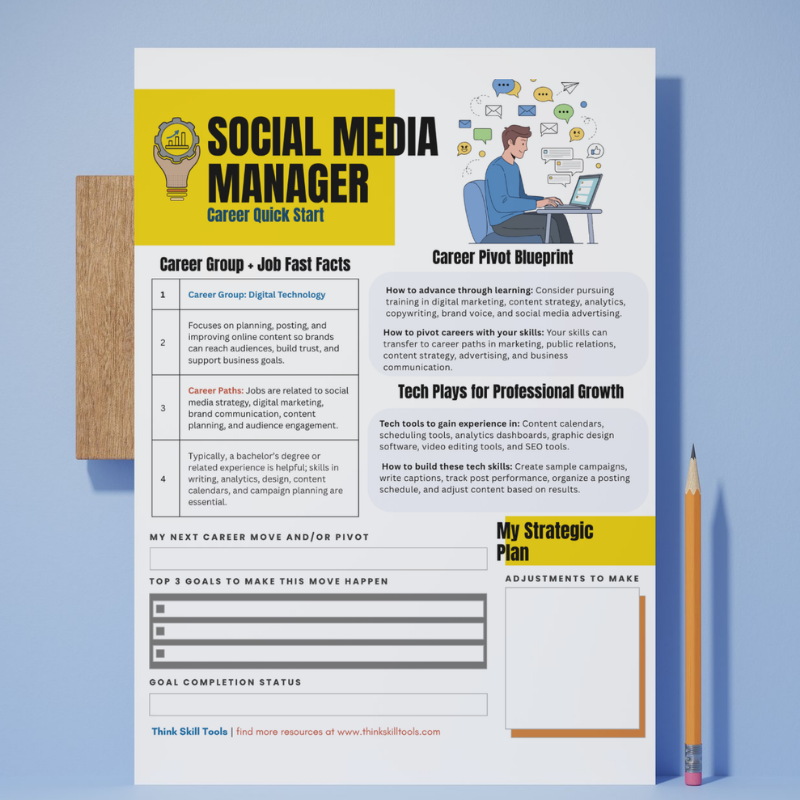
- Use Career Quick Start Guides and Planners to discover career options and connect your growing skills to real-world professions.

Hello There! Nice to meet you 🙂
I am Dr. Danielle Reid. Career education and keeping learning fun really is my jam. No I am not a formally trained career coach. I am the product of a family that did some crazy-amazing career coaching to help me reach my dreams. Nowadays I find myself doing my own career coaching for my three kids, with a lot more knowledge, tools, and resources to share.
Additional Good Reads